Nuwara Eliya
Tea estates, cottage gardens and colonial hotels at nineteen hundred metres, where the British came to escape the heat and it still gets genuinely cold at night.
- When to go
- Cool all year. April is the local season, when Sri Lankan holidaymakers arrive for the New Year and the town is at its busiest and liveliest. Nights are cold enough for a jumper year-round and most rooms have no heating.
- How long to stay
- One or two nights, and two if you intend to walk Horton Plains.
- Getting there
- A slow, beautiful road up from Kandy, or by train to Nanu Oya station, which is a short drive from the town.
Need a ride there? See the fixed-price Colombo Airport (CMB) to Nuwara Eliya transfer
What it is
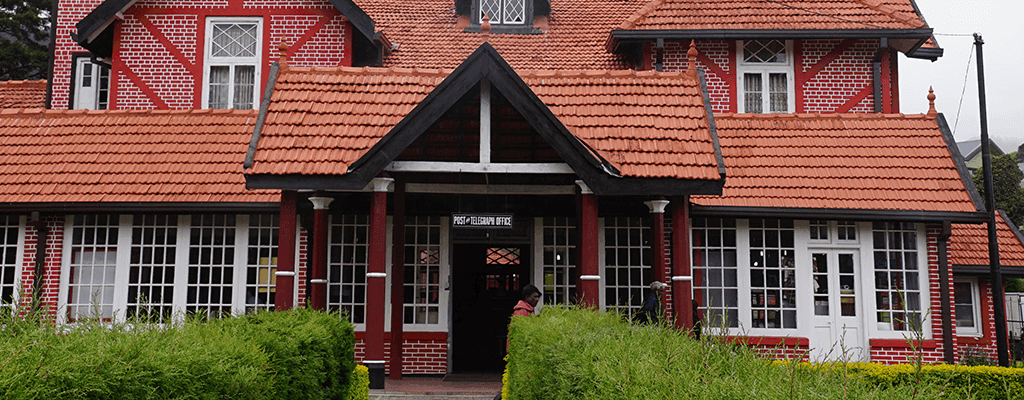
The British built Nuwara Eliya as a hill station in the nineteenth century and made it look as much like home as the climate allowed: a racecourse, a golf course, a boating lake, hedges and rose beds, and a post office in red brick. Locals call it Little England, and while the name is laid on thick for visitors, the bones of it are real.
The surrounding slopes are tea country proper. Some of the highest-grown and most valuable Ceylon tea comes from these estates, and the plantations run right up to the edge of town.
Tea
A factory visit is the thing to do here, and it is more interesting than it sounds: withering lofts, rolling machines, the sorting and grading, and the smell of the place. Most estates run short tours ending in a tasting, and the difference between grades is obvious once someone puts them side by side.
The plantations themselves are photogenic and worth an hour's walking. The pluckers are almost all Tamil women whose families were brought from southern India by the British in the nineteenth century — a history worth knowing before you photograph anyone at work.
Horton Plains and World's End
Horton Plains is a high plateau of grassland and cloud forest about an hour and a half away, and the walk there is the best in the country: a nine-kilometre loop taking in Baker's Falls and World's End, an escarpment where the plateau drops away vertically for the better part of a kilometre.
It has to be done at dawn. By mid-morning cloud fills the valley and World's End is a wall of white — this is not an occasional disappointment, it is what happens most days. That means leaving Nuwara Eliya around five in the morning, in the cold, and it is still worth it.
What not to miss in Nuwara Eliya
The things worth building a day around.
A tea factory
Withering, rolling, grading and a tasting. Better than it sounds.
Horton Plains
A nine-kilometre loop over high grassland. Leave before dawn.
World's End
A near-vertical drop off the plateau edge. Clear only in early morning.
Gregory Lake
Boats, horses and the town's evening promenade.
The post office
Red-brick, 1894, and the town's most photographed building.
Our tours that visit Nuwara Eliya
Read straight from the itineraries, so this stays true when a tour changes.
7-Day Sri Lanka Tour: Kandy, Ella, Udawalawe & Galle
7 Days | 6 Nights · from
- Day 4: Tea Country - Nuwara Eliya — Peradeniya Botanical Garden, Ramboda Falls, Visit Tea Plantations & Tea Factory
7-Day Sri Lanka Hill Country Tour: Ella, Kandy & Galle
7 Days | 6 Nights · from
- Day 3: Ella Highlights — Nine Arches Bridge, Little Adam's Peak, Ravana Falls & Ravana Cave, Diyaluma Waterfall, Buduruwagala Rock Temple
- Day 4: Tea Country - Nuwara Eliya — Peradeniya Botanical Garden, Ramboda Falls, Visit Tea Plantations & Tea Factory
10-Day Sri Lanka Tour: Sigiriya, Kandy, Ella, Yala & Bentota
10 Days | 9 Nights · from
- Day 5: Kandy to Nuwara Eliya — Royal botanical gardens, Tea plantation / tea factory visit, Nuwara Eliya city tour
- Day 6: Nuwara Eliya to Ella by Train — Train from Nanu Oya to Ella, Ella 9 Arch bridge, Secret waterfall
10-Day Sri Lanka Highland Tour: Galle, Yala, Ella & Kandy
10 Days | 9 Nights · from
- Day 5: Scenic Train Ride & Horton Plains — Train Journey from Ella to Nanu Oya, Horton Plains National Park (Afternoon trek or next morning option)
- Day 6: Botanical & Tea Trails — Peradeniya Botanical Garden, Ramboda Falls, Tea Factory & Plantation Visit
14-Day Sri Lanka Tour: Culture, Hill Country & Coast
14 Days | 13 Nights · from
- Day 6: Tea Country | Nuwara Eliya — Botanical Garden, Ramboda Falls, Tea Plantation & Factory Tour, Optional: Moon Plains, Gregory Lake, Race Course, Victoria Park
- Day 7: Scenic Train & Ella Trails — Train Journey from Nanu Oya to Ella, Climb Ella Rock, 2 Hours Meditation session with a Buddhist Monk
14-Day Sri Lanka Nature Tour: Sigiriya, Ella, Yala & Galle
14 Days | 13 Nights · from
- Day 8: Hilltop Views & Scenic Train — Early morning trip to Horton Plains National Park, Train Journey from Nanu Oya to Ella
- Day 9: Tea Country | Nuwara Eliya — Botanical Garden, Ramboda Falls, Tea Plantation & Factory Tour, Optional: Moon Plains, Gregory Lake, Race Course, Victoria Park
14-Day Sri Lanka Wildlife, Camping & Ayurveda Tour
14 Days | 13 Nights · from
- Day 7: Tea Country Discovery — Peradeniya Botanical Garden, Ramboda Falls, Tea Factory & Plantation Tour, Optional: Moon Plains, Gregory Lake
- Day 8: Highland Adventure — Horton Plains Hike to World's End, Scenic Train: Nanu Oya → Ella, Nine Arch Bridge
Common questions
If yours is not here, ask — we answer email and WhatsApp within a day.
How cold does Nuwara Eliya get?
Days are mild and nights are cold by Sri Lankan standards — often down to single figures, and occasionally near freezing in the coldest months. Very few hotels have heating, so bring warm clothes you have not needed anywhere else on the island.
Is Horton Plains worth the early start?
Yes, if you leave early enough. World's End is usually clouded over by around nine or ten in the morning, so a dawn start is the whole point rather than an inconvenience. Arrive late and you will walk nine kilometres to look at fog.
Can you visit a tea factory in Nuwara Eliya?
Yes — several estates around the town run short tours through the production process, ending with a tasting. We build one into the day on most itineraries that stay here.
Want Nuwara Eliya in your trip?
Every itinerary we run is a starting point. Tell us how long you have and what you want to see, and we will shape the route around it.